











By Timothy Wilson
Artificial intelligence is rapidly becoming one of the most influential technologies of our time.
Imagine starting work with 47 unread emails, a long report to review and a presentation due in a few hours. An AI assistant can now summarize the report, organize the emails and prepare a first draft of the presentation in minutes.
You still make the decisions.
But you are no longer working alone.
Stanford University’s 2026 AI Index estimates that generative AI reached roughly 53% population-level adoption within three years, while 88% of surveyed organizations reported using AI in at least one business function in 2025.
AI is no longer just an emerging technology. It is becoming part of everyday life.
The Power
AI’s greatest strength is its ability to multiply human productivity.
Research summarized by Stanford found productivity gains of about 14–15% in customer support and 26% in software development in some settings.
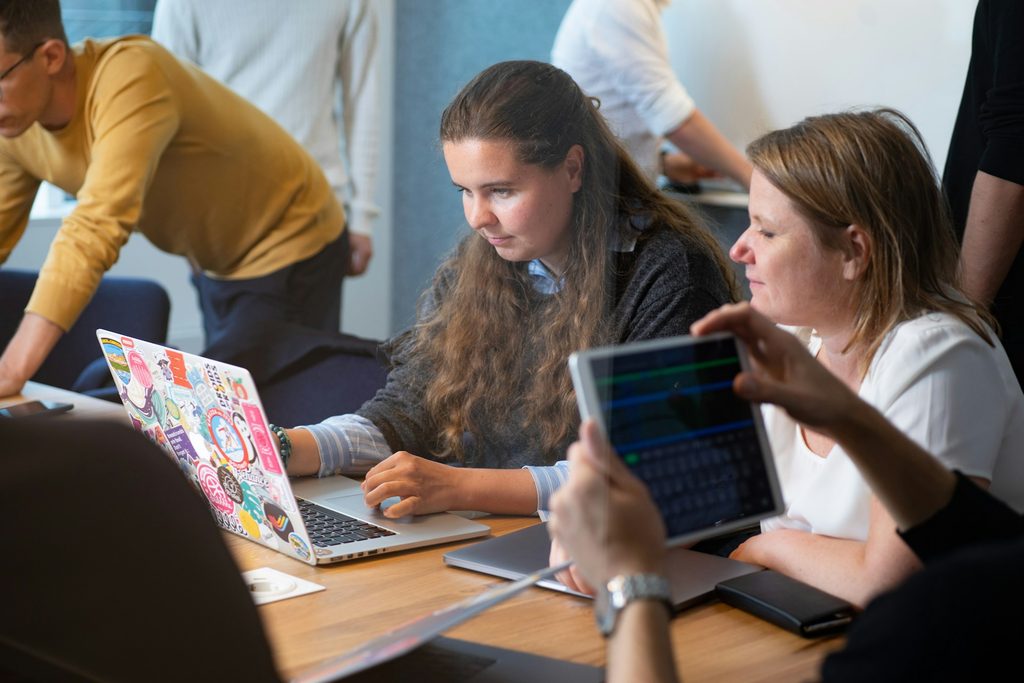
A small-business owner can use AI to draft marketing material. A programmer can generate routine code. A worker can simplify a complicated document with one question:
“Explain this in plain language.”
The real power of AI may not be replacing people, but helping people do more.
The Promise

Healthcare and education show what that promise could look like.
A doctor can use AI as a second pair of eyes when examining medical information. The goal is not doctor versus AI, but doctor + AI.
A student struggling with mathematics late at night can ask an AI tutor to explain the problem differently until it makes sense.
More than four in five U.S. high-school and college students now use AI for school-related activities, according to Stanford.
Used well, AI could make knowledge and expertise far more accessible.
But there is a difference between using AI to learn and using it to avoid learning.
The Perils
AI can also be confidently wrong.
It may generate false information, fabricated references or misleading answers while sounding completely convincing.
That creates a serious problem:
Confidence + Speed + Inaccuracy = Misinformation at Scale
And the risks go beyond bad answers.
AI can clone voices and create realistic fake images and videos. In 2025, the FBI warned about criminals using AI-generated voice messages to impersonate senior U.S. officials.
We are entering a world where people may believe things that never happened—and dismiss real events as fake.
Trust is becoming harder to protect.
What About Jobs?
The World Economic Forum estimates that major technological and economic changes could create 170 million jobs globally by 2030 while displacing 92 million.
The more useful question may therefore be:
Which parts of my job can AI perform—and how can I use AI to become more valuable?
Routine work is especially vulnerable, but human strengths such as judgment, empathy, leadership, creativity and trust remain difficult to replace.
The Human Question

AI can write a speech.
It cannot care about the audience.
It can analyze medical records.
It cannot genuinely comfort a frightened patient.
It can generate options.
It cannot take moral responsibility for choosing the wrong one.
That distinction matters.
AI has enormous capability, but capability is not wisdom.
The sensible approach is neither blind enthusiasm nor fear.
Use AI.
Learn it.
Question it.
Verify it.
Protect your privacy.
And keep humans accountable for the decisions that matter.
Artificial intelligence may become one of the most powerful tools humanity has ever created.
The future should not be about humans serving AI.
It should be about AI serving humanity.
Because the most important question is not:
How intelligent will machines become?
It is:
How wisely will humans use them?
